
Introduction
In the world of digital marketing, two giants dominate the paid advertising industry:Facebook Ads vs Google Ads: Which is Better. Both platforms are powerful tools that allow businesses to reach millions (or even billions) of potential customers. But the million-dollar question is:Facebook Ads vs Google Ads: Which is Better your business?
The truth is, the answer isn’t as simple as picking one over the other. Both have unique strengths, targeting capabilities, and advertising models. Depending on your business goals, budget, and target audience, one platform might outperform the other—or you may need a combination of both for maximum results.
In this article, we’ll dive deep into the differences, pros & cons, strategies, case studies, and statistics of both platforms. By the end, you’ll have a clear picture of which advertising channel will deliver the best ROI (Return on Investment) for your business.
What Are Facebook Ads?
Facebook Ads are paid advertisements that run across the Meta ecosystem—Facebook, Instagram, Messenger, and Audience Network. They are highly visual, engaging, and designed to reach users based on their demographics, interests, and behaviors.
Key Features of Facebook Ads
- Audience Targeting: You can target users based on age, gender, interests, behaviors, and even lookalike audiences.
- Ad Formats: Carousel, image, video, slideshow, stories, reels, and lead generation ads.
- Placements: Ads can appear in the feed, stories, Messenger inbox, and more.
- Goal-Oriented Campaigns: Objectives include brand awareness, lead generation, conversions, and sales.
Example
Imagine you’re launching a new fitness clothing brand. With Facebook Ads, you can target:
- Women aged 18–35 who follow fitness influencers.
- People interested in yoga, gym workouts, or sports.
- Audiences who recently engaged with fitness product pages.
This makes Facebook Ads highly effective for creating demand and building brand awareness.
What Are Google Ads?
Google Ads (formerly known as Google AdWords) is Google’s advertising platform where businesses can bid on keywords to show their ads in Google search results, YouTube, Gmail, and partner websites in the Google Display Network.
Key Features of Google Ads
- Keyword Targeting: Ads appear when users actively search for specific terms (e.g., “buy running shoes online”).
- Ad Formats: Text ads, shopping ads, video ads (YouTube), display banners, and app promotion ads.
- Placement: Search engine results pages (SERPs), display network, YouTube, and Gmail.
- High Intent Audience: Users are actively searching, which increases conversion chances.
Example
If your fitness clothing brand runs Google Ads for the keyword “buy women’s gym leggings online”, your ad appears to people ready to purchase, making it more likely to generate direct sales.
Facebook Ads vs Google Ads: Key Differences
| Feature | Facebook Ads | Google Ads |
|---|---|---|
| Ad Type | Social ads (visual, audience-based) | Search ads (keyword-based, intent-driven) |
| Targeting | Interests, demographics, behaviors | Keywords, search intent, remarketing |
| Best For | Brand awareness, social engagement | High-intent purchases, conversions |
| Cost Model | CPC, CPM, CPA | CPC, CPM, CPA |
| Reach | 3+ billion monthly users (Meta apps) | 8.5 billion daily Google searches |
| Speed of Results | Faster for brand engagement | Faster for direct conversions |
| Ad Formats | Visual-heavy (images, videos, reels) | Text, shopping, display, video ads |
Advantages of Facebook Ads
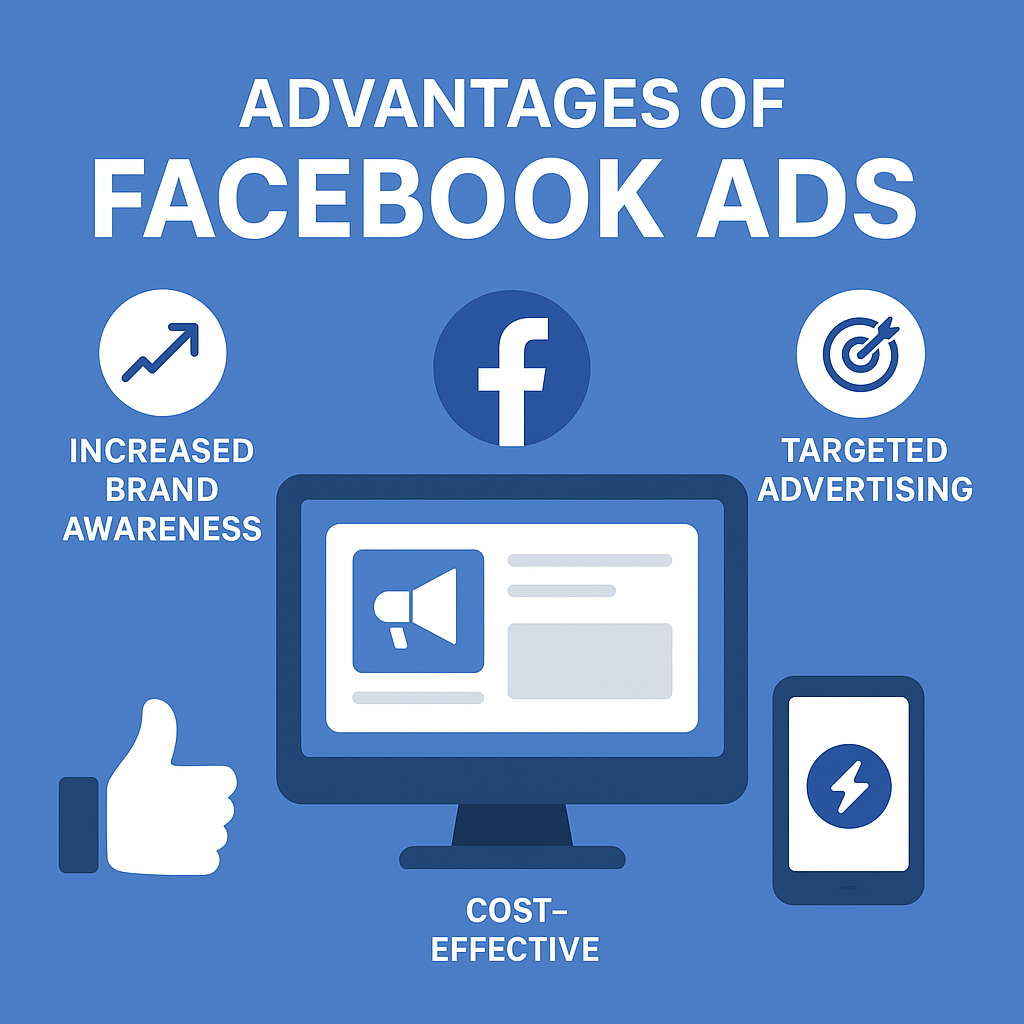
- Advanced Targeting Options – Ability to target niche audiences by behavior, interest, and location.
- Engaging Ad Formats – Video, carousel, and story ads make content interactive.
- Cost-Effective for Awareness – Lower CPM (Cost per 1000 impressions) compared to Google.
- Remarketing Power – Retarget users who visited your website or engaged with your posts.
- Great for Social Proof – Likes, shares, and comments boost credibility.
Disadvantages of Facebook Ads
- Users aren’t actively searching to buy; they might just be scrolling.
- Ad fatigue can occur quickly if not refreshed.
- Tracking has become more difficult due to Apple iOS privacy updates.
- Competition is high in some niches (e.g., e-commerce, fashion).
Advantages of Google Ads
- High Intent Audience – Users are actively searching for solutions.
- Massive Reach – Covers Google Search, YouTube, Gmail, and millions of websites.
- Diverse Ad Formats – Search ads, shopping ads, video ads, and more.
- Strong Conversion Rate – Especially effective for e-commerce and service-based businesses.
- Flexible Budgeting – Can start small and scale based on ROI.
Disadvantages of Google Ads
- Higher CPC in Competitive Niches – E.g., insurance, finance, real estate.
- Complex Learning Curve – Requires keyword research and bidding strategy.
- Click Fraud Risk – Competitors may click your ads.
- Not Always Visual – Text ads may not be as engaging as Facebook’s creatives.
Real-Life Case Studies
Case Study 1: E-commerce Store Launch
- Strategy: Used Facebook Ads for brand awareness and Google Ads for purchase intent.
- Result: Facebook Ads brought 60% of traffic, while Google Ads delivered 70% of total sales.
- Insight: Combining both platforms maximized reach and conversions.
Case Study 2: Local Service Business
- Strategy: Ran Google Ads targeting “Plumber near me” keywords.
- Result: 40% increase in calls within 2 weeks.
- Insight: Google Ads worked better for local intent-based searches.
Case Study 3: Fashion Brand
- Strategy: Focused on Facebook and Instagram ads with influencer-style creatives.
- Result: Boosted Instagram followers by 200% and generated strong awareness.
- Insight: Facebook Ads are excellent for brand storytelling.
Cost Comparison: Facebook Ads vs Google Ads
- Facebook Ads Average CPC: $0.97 (varies by industry)
- Google Ads Average CPC: $2.69 (can go up to $50+ in competitive niches like law and finance)
- Facebook Ads CPM: $7–$10
- Google Ads CPM: $30+ in search campaigns
👉 If you want cheaper reach and engagement, Facebook Ads are better.
👉 If you want direct conversions with high intent, Google Ads are worth the higher cost.
Which One Should You Choose?
Facebook Ads Are Better If:
- You want to build brand awareness.
- You’re selling visual products like fashion, food, or lifestyle items.
- Your goal is social engagement and community building.
- You’re on a limited budget and want maximum reach.
Google Ads Are Better If:
- You’re in service industries like plumbing, insurance, law, or healthcare.
- Your audience is actively searching for solutions.
- You need quick conversions and leads.
- You have a higher budget for competitive keywords.
Expert Recommendation
Instead of asking “Facebook Ads vs Google Ads: Which is Better, the smarter question is:
“How can I use both together for maximum ROI?”
- Start with Facebook Ads to generate awareness and grow your audience.
- Retarget those audiences with Google Ads when they’re actively searching to buy.
- Use Google Ads for direct conversions and Facebook Ads for storytelling & engagement.
This hybrid strategy ensures you cover both the awareness stage and the conversion stage of the buyer’s journey.
Conclusion
When it comes to Facebook Ads vs Google Ads: Which is Better, there’s no single winner. Both platforms are powerful in their own way.
- Facebook Ads excel at creating demand, brand awareness, and social engagement.
- Google Ads dominate in capturing existing demand and driving high-intent conversions.
The right choice depends on your business goals, budget, and audience. In many cases, combining both delivers the best results.
So, instead of asking “Facebook Ads vs Google Ads – Konsa better hai?”, the real answer is: “Both can be better when used strategically together.”
FAQs About Facebook Ads vs Google Ads
Q1. Which is cheaper:Facebook Ads vs Google Ads: Which is Better?
A: On average, Facebook Ads are cheaper in terms of reach (CPM), while Google Ads are costlier but more conversion-focused.
Q2. Can small businesses afford Google Ads?
A: Yes, but budget allocation is key. Start with low-competition long-tail keywords to keep CPC affordable.
Q3. Are Facebook Ads effective for B2B businesses?
A: Absolutely! LinkedIn may be the first choice for B2B, but Facebook’s advanced targeting still works well for niche industries.
Q4. Which works faster: Facebook Ads or Google Ads?
A: Google Ads can deliver faster sales conversions, while Facebook Ads are quicker in generating brand awareness and engagement.
Q5. Should I run both Facebook Ads and Google Ads together?
A: Yes, if your budget allows. A combined strategy usually provides better ROI, covering both awareness and conversion stages Facebook Ads vs Google Ads: Which is Better Facebook Ads vs Google Ads: Which is Better Facebook Ads vs Google Ads: Which is Better Facebook Ads vs Google Ads: Which is Better Facebook Ads vs Google Ads: Which is Better Facebook Ads vs Google Ads: Which is Better Facebook Ads vs Google Ads: Which is Better Facebook Ads vs Google Ads: Which is Better Facebook Ads vs Google Ads: Which is Better.