
Introduction
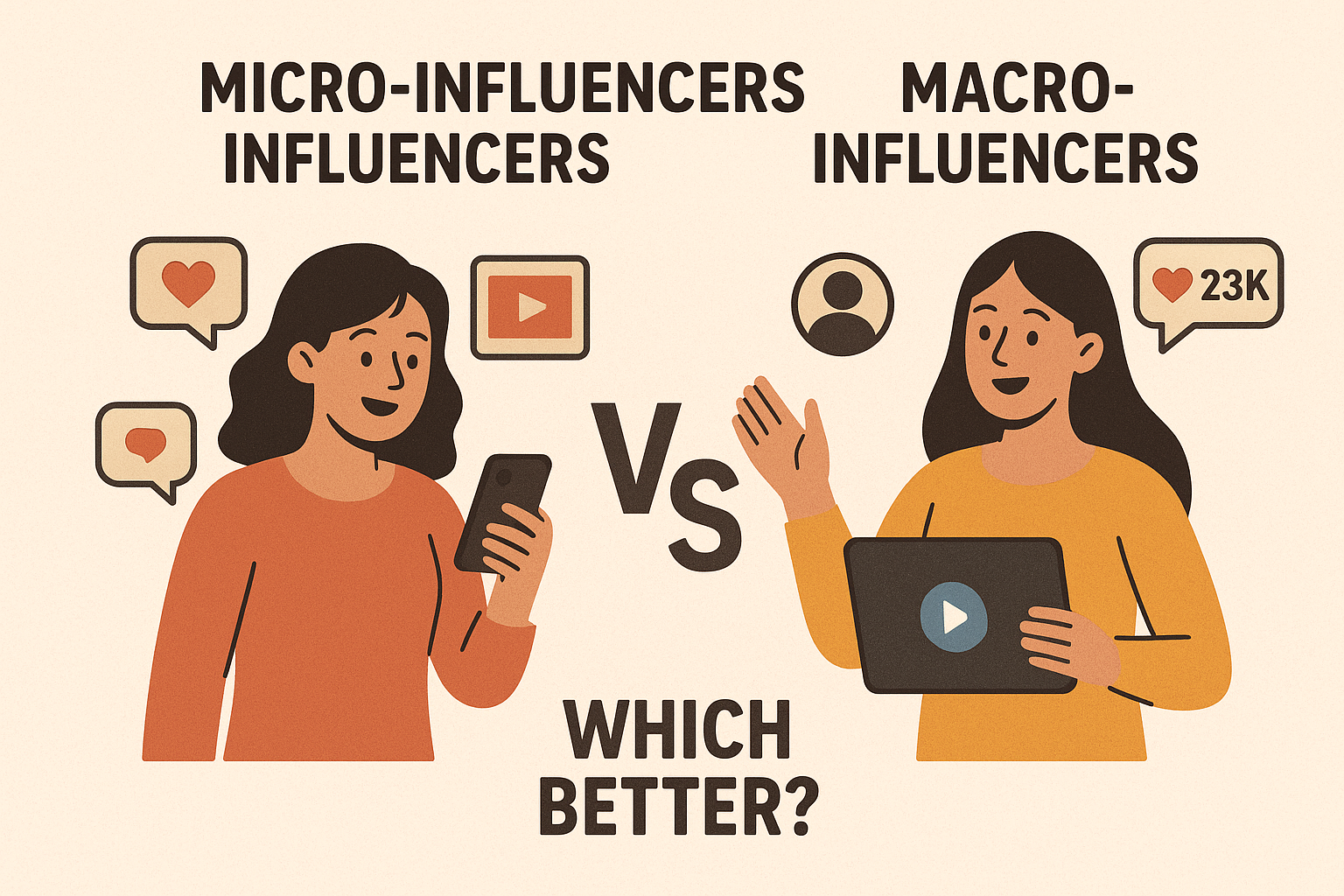
In the ever-evolving world of influencer marketing, brands are constantly trying to decide which type of influencer brings better results — micro or macro. Both play powerful roles in shaping consumer behavior and driving engagement, but they differ significantly in reach, engagement rate, cost, and authenticity Micro-Influencers Macro-Influencers Which Better?
According to a 2024 Influencer Marketing Hub report, influencer marketing is projected to reach over $24 billion globally, with brands shifting budgets towards influencer collaborations more than ever before. Yet, the dilemma remains — should you collaborate with micro-influencers, who boast niche, loyal audiences, or macro-influencers, who command massive reach?
This article provides a comprehensive breakdown of the two, highlighting key differences, advantages, drawbacks, and real-world examples to help you determine which influencer type suits your brand best.
H2: Understanding Influencer Tiers
Before comparing micro and macro influencers, it’s crucial to understand how influencers are categorized. Influencers are usually grouped by follower count:
| Influencer Type | Followers Range | Common Platforms | Best For |
|---|---|---|---|
| Nano-Influencers | 1K – 10K | Instagram, TikTok | Hyper-local marketing |
| Micro-Influencers | 10K – 100K | Instagram, YouTube, X | Targeted engagement |
| Macro-Influencers | 100K – 1M | YouTube, Instagram | Brand awareness campaigns |
| Mega-Influencers | 1M+ | Instagram, YouTube, TikTok | Mass reach campaigns |
Now, let’s dive deeper into the two main categories — micro-influencers and macro-influencers.
H2: What Are Micro-Influencers?
H3: Definition and Overview
Micro-influencers are creators with a follower base between 10,000 and 100,000. They typically focus on a specific niche — such as fitness, skincare, education, tech gadgets, or sustainable living.
What sets them apart is their authentic connection with followers. They’re seen as trusted peers rather than distant celebrities.
H3: Key Characteristics of Micro-Influencers
- High engagement rate: Average engagement rate is 3–7%, compared to around 1–2% for larger influencers.
- Niche expertise: Their followers share common interests, making their content highly relevant.
- Authenticity: Audiences perceive them as relatable and trustworthy.
- Cost-effective: Perfect for small or medium-sized businesses with limited budgets.
H3: Real-Life Example
A great example is @plantkween (Christopher Griffin), a micro-influencer who focuses on plant care and self-expression. Despite a modest follower count compared to big influencers, brands like Target and The Sill collaborate with them because of their authentic engagement and community loyalty.
H2: What Are Macro-Influencers?
H3: Definition and Overview
Macro-influencers have a follower count ranging from 100,000 to 1 million. These influencers often started as bloggers, YouTubers, or celebrities, and now have established online personas.
They’re ideal for broad brand awareness campaigns, as they can reach large, diverse audiences quickly.
H3: Key Characteristics of Macro-Influencers
- Massive reach: Ideal for campaigns that target national or global markets.
- Professional quality content: Often work with production teams for polished visuals.
- Higher brand reputation: Their endorsement can significantly boost a brand’s credibility.
- Higher costs: Collaborations can cost from $5,000 to $100,000+, depending on reach and platform.
H3: Real-Life Example
Fitness influencer Chloe Ting, with millions of YouTube subscribers, exemplifies a macro-influencer. Her collaborations with Gymshark and Samsung reach millions globally, creating huge brand visibility within a short time.
H2: Micro vs Macro Influencers — A Detailed Comparison
H3: Engagement Rate
Engagement rate often decreases as follower count increases.
- Micro-influencers: Average engagement rate of 5–7%.
- Macro-influencers: Average engagement rate of 1–3%.
Insight: Micro-influencers build genuine connections; followers trust their recommendations more.
H3: Reach and Visibility
Macro-influencers win here. Their large audience ensures mass exposure, making them ideal for brand awareness campaigns.
Example: When Coca-Cola launched its “Share a Coke” campaign, it used macro-influencers to promote the message globally, resulting in billions of impressions.
H3: Cost and ROI
- Micro-influencers: Lower cost, higher engagement. Ideal for small to mid-level brands.
- Macro-influencers: High cost but greater reach. Suited for established brands with big budgets.
A Markerly study showed that influencers with under 100K followers drive better engagement and conversions per dollar spent than those with millions.
H3: Audience Relationship
Micro-influencers engage in two-way conversations — responding to comments, DMs, and creating community trust.
Macro-influencers, though influential, may appear less approachable, as their large audiences make personal interaction harder.
H3: Brand Fit
If your goal is authenticity and conversions, micro-influencers shine.
If your goal is awareness and reach, macro-influencers dominate.
H2: Pros and Cons
H3: Micro-Influencers
Pros:
- High engagement and trust
- Cost-effective
- Strong niche targeting
- More flexibility and authenticity
Cons:
- Limited reach
- Managing multiple micro-collaborations can be time-consuming
- May lack professional equipment or experience
H3: Macro-Influencers
Pros:
- Huge reach and visibility
- Professional-quality content
- Strong influence on brand perception
- Effective for product launches or global campaigns
Cons:
- Expensive collaborations
- Lower engagement rates
- Less niche-specific audiences
- May appear less relatable
H2: Case Studies
H3: Case Study 1 — Daniel Wellington’s Micro-Influencer Success
Luxury watch brand Daniel Wellington grew from a small startup to a global sensation by leveraging thousands of micro-influencers on Instagram.
Each influencer shared personal-style posts with the brand’s hashtag, creating massive organic reach.
The campaign achieved a 200% increase in brand mentions within a year.
H3: Case Study 2 — Nike’s Macro-Influencer Strategy
Nike frequently collaborates with macro and mega-influencers like Cristiano Ronaldo and Serena Williams. These partnerships drive global awareness and sales across continents.
Their content garners millions of views, helping Nike maintain its global dominance in sportswear.
H2: When to Choose Micro vs Macro Influencers
H3: Choose Micro-Influencers If:
- You want high engagement and trust
- You’re a small or medium brand with limited budget
- You target a specific niche audience
- You value authentic content and community-building
H3: Choose Macro-Influencers If:
- You want massive visibility and reach
- You have a large marketing budget
- You’re launching a new product globally
- You aim to strengthen brand reputation
H2: Combining Both for Maximum Impact
Many successful brands use a hybrid influencer strategy, blending micro and macro influencers for layered impact.
For example:
- Macro-influencers create buzz and awareness.
- Micro-influencers drive engagement and sales conversions.
Example:
During a product launch, L’Oréal combined celebrity influencers for exposure with micro-beauty creators for authentic tutorials.
Result: A 45% rise in engagement and a 30% boost in conversions within the campaign period.
H2: Statistics That Matter
- Influencer Marketing Hub (2024): 67% of brands prefer working with micro-influencers due to higher ROI.
- Forbes Study: Micro-influencers are 60% more effective in generating engagement than macro-influencers.
- Statista (2024): The global influencer market is expected to surpass $25 billion by 2025.
- Later.com Report: Campaigns using both micro and macro influencers generate 30% higher overall ROI.
H2: Actionable Tips for Brands
- Define clear goals: Awareness, engagement, or sales — your influencer type depends on your goal.
- Analyze your target audience: Identify where they spend time and who influences them.
- Evaluate engagement rates, not just followers.
- Diversify influencer types: A mix of micro and macro maximizes results.
- Track performance: Use analytics tools like HypeAuditor, Upfluence, or Sprout Social to measure ROI.
H2: Conclusion
Both micro-influencers and macro-influencers hold powerful positions in the marketing ecosystem.
The best choice depends on your brand’s goals, budget, and target audience.
If you want authentic engagement and conversions, micro-influencers are your go-to.
If you need mass reach and brand recognition, macro-influencers deliver.
However, the most successful brands blend both for balanced results — leveraging macro reach with micro authenticity.
In today’s world where trust matters as much as reach, the ideal influencer strategy is not one or the other — but both.
H2: FAQs About Micro vs Macro Influencers
H3: 1. Which type of influencer offers better ROI?
Micro-influencers generally provide better ROI because their engagement and conversion rates are higher per dollar spent.
H3: 2. Are macro-influencers better for brand awareness?
Yes, macro-influencers are ideal for large-scale awareness campaigns, product launches, or global branding initiatives.
H3: 3. How many followers does a micro-influencer have?
A micro-influencer typically has between 10,000 and 100,000 followers on social media platforms.
H3: 4. Can small businesses afford influencer marketing?
Absolutely! Micro-influencer partnerships are affordable and highly effective for small and medium enterprises.
H3: 5. What’s the best strategy — micro or macro?
The best strategy is often a mix of both. Use macro-influencers for exposure and micro-influencers for engagement and conversion.
Micro-Influencers Macro-Influencers Which Better? Micro-Influencers Macro-Influencers Which Better? Micro-Influencers Macro-Influencers Which Better? Micro-Influencers Macro-Influencers Which Better? Micro-Influencers Macro-Influencers Which Better? Micro-Influencers Macro-Influencers Which Better? Micro-Influencers Macro-Influencers Which Better? Micro-Influencers Macro-Influencers Which Better? Micro-Influencers Macro-Influencers Which Better? Micro-Influencers Macro-Influencers Which Better? Micro-Influencers Macro-Influencers Which Better? Micro-Influencers Macro-Influencers Which Better? Micro-Influencers Macro-Influencers Which Better? Micro-Influencers Macro-Influencers Which Better? Micro-Influencers Macro-Influencers Which Better?