
Introduction: The Myth About Backlinks
For years, marketers have believed that backlinks are the ultimate ranking factor. True — backlinks help Google measure authority, but they aren’t the only thing that matters. How to Rank on Google Without Backlinks.
Many new websites don’t have strong backlinks, yet still manage to rank high on Google. How? By mastering content relevance, user experience (UX), and search intent alignment.
Google’s algorithm has evolved. Today, E-E-A-T (Experience, Expertise, Authoritativeness, Trustworthiness) and content satisfaction carry massive weight. That means even without backlinks, your page can climb to the top — if it perfectly serves user intent.
Why Ranking Without Backlinks Is Possible
A decade ago, backlinks were like votes — the more you had, the higher you ranked. But Google’s AI-driven updates (RankBrain, BERT, and Helpful Content Update) changed the rules.
Here’s why ranking without backlinks is possible today:
- Google prioritizes user intent — It looks for content that fully answers queries.
- Behavioral metrics matter — Dwell time, bounce rate, and engagement send strong signals.
- On-page SEO and topical authority can compensate for link authority.
- Content freshness and semantic optimization matter more than ever.
🧠 Real Example:
A case study by Ahrefs showed that some pages with zero backlinks still ranked on Page 1 simply because they had in-depth, intent-matching content and strong on-page optimization.
Step 1: Master Search Intent
Before you write a single word, understand what users actually want. Search intent falls into four types:
- Informational: How-to guides, explanations
- Navigational: Looking for a specific brand or site
- Transactional: Ready to buy
- Commercial: Comparing options before purchasing
👉 Example:
For the keyword “how to rank without backlinks,” the intent is informational.
Users expect a step-by-step guide, not a sales pitch.
If your content satisfies that intent completely, you’re already beating 70% of competitors.
Step 2: Build Topical Authority
You don’t need backlinks if Google already sees you as an expert in your niche.
This is where Topical Authority comes in — writing multiple high-quality articles around a central theme.
Example Strategy:
If your niche is SEO:
- Write about keyword research, on-page SEO, content optimization, technical SEO, and Google algorithm updates.
- Interlink them internally with proper anchor texts (e.g., “learn more about on-page SEO”).
Google recognizes these content clusters as expert coverage — giving you authority even without external links.
Step 3: Optimize Your On-Page SEO
This is your most powerful weapon when you lack backlinks.
🔍 Key On-Page Optimization Checklist:
| Area | What to Do | Why It Matters |
|---|---|---|
| Title Tags | Use primary keywords naturally | Boosts CTR and relevance |
| Meta Description | Include value + CTA | Increases click rate |
| Headers (H1–H4) | Structure content logically | Improves readability |
| Keyword Placement | Add to intro, subheadings, conclusion | Helps indexing |
| Image Alt Text | Describe images with keywords | Improves SEO and accessibility |
| URL Structure | Keep short and keyword-rich | Easier for Google to crawl |
💡 Tip: Aim for semantic keywords (LSI) — e.g., “SEO ranking,” “search visibility,” “Google ranking factors.” These build topic depth.
Step 4: Create High-Retention Content
Google measures how long users stay on your page.
If people quickly leave (pogo-sticking), your ranking drops — backlinks or not.
To retain users:
- Use short paragraphs and clear visuals
- Add examples, bullet points, and charts
- Include interactive elements like FAQs or infographics
- Write for humans first, SEO second
🧩 Example:
A “no-backlink” SEO blog increased dwell time by 45% after redesigning its layout and adding summaries under each heading.
Step 5: Optimize for Featured Snippets
Featured Snippets (position zero) can send massive traffic — even without a single backlink.
How to win them:
- Answer direct questions in 40–60 words
- Use H2 or H3 question headings
- Add tables, lists, and bullet points
These structured snippets make it easier for Google to pick your content for voice search and zero-click results.
How to Rank on Google Without Backlinks
Advanced Techniques to Boost Visibility and User Experience
Step 6: Leverage User Experience (UX) Signals
Google’s algorithm now prioritizes user satisfaction — it wants to show pages that users actually enjoy reading.
So even without backlinks, strong UX metrics can push your content higher in the rankings.
🎯 Key UX Metrics That Impact SEO:
| Metric | Description | Ideal Value |
|---|---|---|
| Dwell Time | How long users stay on your page | 2–3+ minutes |
| Bounce Rate | How many visitors leave instantly | Below 55% |
| Pages per Session | How many pages users visit | 2+ pages |
| CTR (Click-Through Rate) | % of users clicking your title | Above 4% |
Google uses these signals as indicators of content quality. If visitors stay, read, and interact — Google assumes your content is valuable.
💡 Example:
Neil Patel’s SEO blogs often rank high because his pages are well-designed, interactive, and informative. Users scroll, click, and read — boosting behavioral metrics.
Step 7: Strengthen Internal Linking Structure
If backlinks are “votes” from other sites, internal links are votes from your own site.
They guide both Google and readers to understand your site’s content hierarchy.
🔗 Internal Linking Best Practices:
- Use Descriptive Anchor Texts — e.g., “learn advanced on-page SEO techniques” instead of “click here.”
- Link from High-Traffic Pages to New Pages — pass on internal authority.
- Create Content Clusters — interlink all articles around one main topic.
- Limit Outbound Links — focus on keeping users within your ecosystem.
🧩 Real Example:
HubSpot’s blog is a classic model — every new article links to relevant older posts.
This helps Google crawl efficiently and keeps users exploring more pages, boosting SEO without any backlinks.
Step 8: Optimize for Core Web Vitals
Google’s Page Experience update heavily focuses on speed, stability, and interactivity — all measurable through Core Web Vitals.
⚙️ Core Web Vitals Breakdown:
| Metric | What It Measures | Recommended Value |
|---|---|---|
| LCP (Largest Contentful Paint) | Page loading speed | ≤ 2.5 seconds |
| FID (First Input Delay) | Time before user interaction | ≤ 100 ms |
| CLS (Cumulative Layout Shift) | Visual stability | ≤ 0.1 |
Improving these metrics boosts both ranking and retention.
🚀 Optimization Tips:
- Compress images with WebP format
- Use lazy loading for images
- Minify CSS/JS files
- Use CDNs (Content Delivery Networks)
- Pick lightweight themes if on WordPress
🔍 Tools to Test:
- Google PageSpeed Insights
- GTmetrix
- Lighthouse (Chrome DevTools)
Step 9: Use Schema Markup for Rich Results
Schema markup helps Google understand your page better. Even with no backlinks, schema can help you earn rich snippets, FAQs, and ratings that improve visibility.
🧠 Common Schema Types for Content Creators:
- Article / BlogPosting — for blog articles
- FAQPage — for pages with question-answer content
- HowTo — for step-by-step guides
- Product / Review — for eCommerce or affiliate blogs
Adding schema improves your click-through rate (CTR) by making your result visually stand out on Google’s search page.
💡 Example:
A small recipe site added FAQ schema to its articles and saw a 23% increase in organic clicks — with zero backlinks.
Step 10: Focus on Content Freshness & Updates
Google prefers up-to-date content.
If your competitors’ pages are outdated, you can outrank them simply by refreshing your content regularly.
🔄 Strategies to Keep Content Fresh:
- Update statistics, screenshots, and tools every few months.
- Re-optimize for new semantic keywords (from Google Search Console).
- Add new sections, FAQs, or visuals to improve user experience.
- Republish with an updated date — it signals freshness to Google.
🧩 Example:
Backlinko’s “SEO Statistics” post ranks #1 because it’s updated monthly. Google trusts it as a living, relevant resource.
Step 11: Optimize for Voice Search and Featured Snippets
More than 50% of Google searches are now voice-based.
That means ranking without backlinks also depends on answering questions conversationally.
🗣️ Voice Optimization Tips:
- Use long-tail keywords (e.g., “how can I rank without backlinks fast”)
- Write Q&A style subheadings
- Keep sentences short and natural
- Include direct answers in 40–60 words
💬 Example:
“Google ranks websites without backlinks when their content matches user intent, loads quickly, and provides high engagement metrics.”
Such concise, voice-ready statements help Google feature your content in voice and zero-click searches.
Step 12: Engage Readers to Increase On-Page Time
The longer a user stays on your page, the better your rankings — even without backlinks.
Engagement-driven content sends “positive satisfaction signals” to Google.
🧭 Engagement Techniques:
- Add polls, quizzes, or comment sections
- Include data visuals and real examples
- Use storytelling to hold attention
- Write personalized introductions
💡 Example:
A blog post with a short story (“I ranked #1 without a single backlink… here’s how”) keeps readers hooked — lowering bounce rate and improving SEO.
Step 13: Optimize for Mobile SEO
Over 65% of Google searches happen on mobile.
If your site isn’t mobile-friendly, rankings will suffer no matter how good your content is.
📱 Mobile Optimization Tips:
- Use responsive design — ensure layout fits all screens.
- Simplify menus and navigation.
- Avoid intrusive pop-ups or heavy images.
- Test using Google’s Mobile-Friendly Test Tool.
📊 Stat:
According to Think with Google, 53% of mobile users abandon sites that take over 3 seconds to load.
Step 14: Create Content Depth with Multimedia
Google loves multimedia-rich pages — they increase user engagement and dwell time.
Including videos, infographics, and charts improves the “stickiness” of your page.
🎨 What to Add:
- YouTube videos summarizing your content
- Infographics that explain complex topics visually
- Screenshots or GIFs for tutorials
Even without backlinks, multimedia helps your content rank for image and video searches, expanding your reach.
Conclusion
Ranking without backlinks is not only possible — it’s a smart long-term strategy.
By improving UX, internal linking, and technical SEO, you’re telling Google that your site delivers value first.
Remember: Google doesn’t rank links — it ranks experiences.
How to Rank on Google Without Backlinks
Real Case Studies, Pros & Cons, and Actionable SEO Insights
Step 15: Use AI Tools for Smarter SEO (Without Backlinks)
Artificial Intelligence has revolutionized SEO — allowing even small websites to compete with authority sites without link-building.
By using AI-powered tools, you can analyze search intent, optimize for semantic relevance, and create high-quality content at scale.
🤖 Best AI Tools for No-Backlink SEO:
| Tool | Function | Benefit |
|---|---|---|
| SurferSEO | On-page optimization | Analyzes top-ranking pages and recommends keyword density |
| Frase.io | Content brief creation | Helps write intent-based articles |
| Rank Math / Yoast SEO | WordPress optimization | Ensures technical SEO compliance |
| ChatGPT | Content ideation and editing | Generates ideas, FAQs, and meta descriptions |
| Grammarly | Readability & tone | Keeps content professional and human-like |
💡 Pro Insight:
AI helps identify semantic keywords (LSI) and content gaps. Instead of chasing backlinks, you strengthen your topical relevance — which is a direct ranking signal today.
Step 16: The Power of Behavioral SEO
Behavioral SEO is all about how users interact with your content.
Even without backlinks, Google watches signals like:
- Time on page
- Scroll depth
- Return visits
- User comments and shares
These metrics reflect content satisfaction, which Google’s AI systems (like RankBrain) interpret as authority.
🧭 How to Optimize Behavioral SEO:
- Start articles with curiosity hooks (“Most people think backlinks are everything — they’re wrong.”)
- Include visual dividers (images, subheadings, bullets).
- End with CTAs that keep users on your site (e.g., “Read our full on-page SEO checklist”).
🔍 Example:
A content site on “mindset growth” ranked in top 5 for multiple keywords just by improving average session time from 1:30 to 3:20 minutes — with zero backlinks.
Step 17: Build a Content Ecosystem Instead of Backlinks
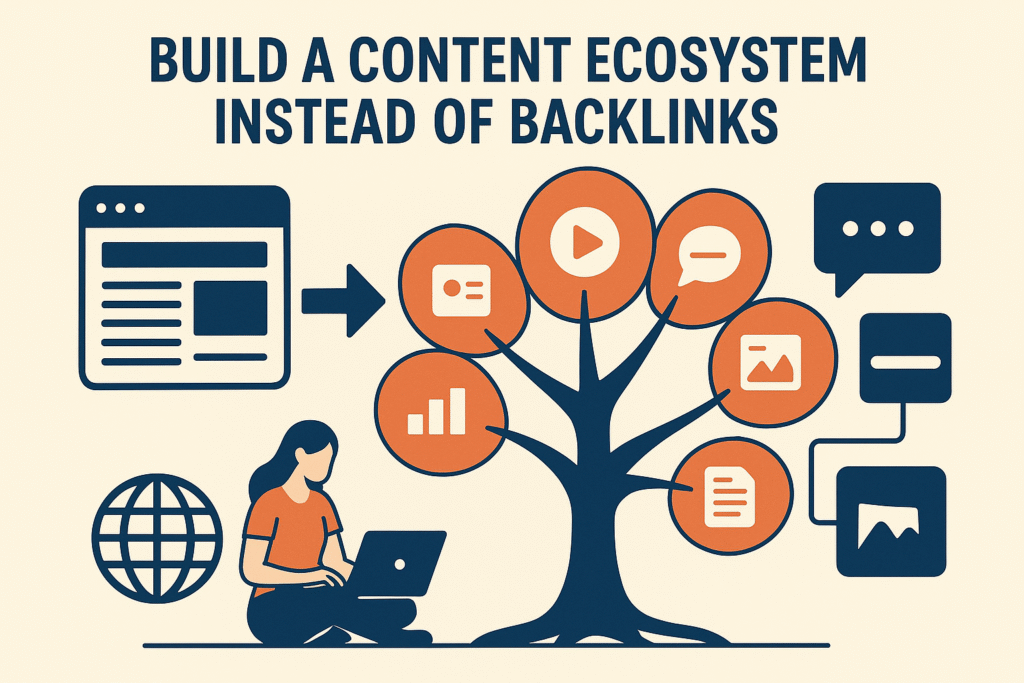
Instead of chasing external links, focus on internal ecosystem building — where your content promotes itself organically.
🧱 Steps to Build Your Ecosystem:
- Write pillar articles (2,000+ words) on key topics.
- Create supporting articles around subtopics.
- Interlink all pages with consistent anchor text.
- Promote via social media, email newsletters, and Quora for organic traffic signals.
This creates traffic loops — even if one page ranks, the others benefit through user flow.
💡 Example:
A new marketing blogger created 15 interlinked articles on SEO basics. Within 3 months, 4 articles started ranking on Google’s Page 1 — with zero backlinks, thanks to internal authority flow.
Step 18: Real-World Case Studies
Let’s look at a few real-world examples of websites ranking without backlinks:
📈 Case Study 1: Blogging Wizard
- Strategy: Focused on keyword-rich long-form guides.
- Result: Ranked for multiple high-volume terms despite low domain authority.
- Lesson: Depth + topical coverage beats backlink volume.
📊 Case Study 2: Medium Creators
- Strategy: Published intent-based, well-structured posts using keywords naturally.
- Result: Articles ranked top 3 for “digital marketing tips” without backlinks.
- Lesson: Platform trust + quality UX drives rankings.
🧩 Case Study 3: Niche Product Review Blog
- Strategy: Used schema markup + FAQ sections + Core Web Vitals optimization.
- Result: 40% increase in traffic with zero link building.
- Lesson: Technical excellence and user value replace backlinks in niche SEO.
Step 19: The Pros & Cons of Ranking Without Backlinks
✅ Pros:
- Low Cost: No need for outreach or guest posting campaigns.
- Sustainable: You build authority through content, not link farms.
- Control: Everything is within your reach — UX, content, speed, and engagement.
- Google-Safe: No risk of penalties from spammy backlinks.
- Long-Term Benefits: Great content continues to bring organic traffic.
⚠️ Cons:
- Slower Results: Organic trust takes time to build.
- Limited Competitive Edge: Harder to outrank high DA (Domain Authority) sites.
- Requires Consistency: Needs constant content updates and optimization.
- Dependent on On-Page Excellence: One weak element (UX, speed, or structure) can hurt rankings.
🎯 Pro Tip:
Use a hybrid strategy — build strong content first, then selectively acquire a few natural backlinks later to scale even faster.
Step 20: Action Plan – Your “No-Backlink SEO” Checklist
Here’s a practical roadmap you can implement right now:
✅ Before Publishing:
- Conduct keyword + intent research
- Write in-depth content (2,000+ words)
- Use H1–H4 heading structure
- Add schema markup
- Optimize images (Alt text + compression)
✅ After Publishing:
- Internally link to 3–5 relevant pages
- Share on social media and Quora
- Monitor via Google Search Console
- Update every 60–90 days
✅ Ongoing:
- Improve dwell time and CTR
- Refresh old posts
- Add FAQs and visuals
- Track metrics like bounce rate and average position
This checklist is your blueprint to ranking sustainably — no backlinks needed.
Conclusion: You Don’t Need Links to Win Google
Backlinks once ruled SEO, but today, Google rewards relevance, quality, and engagement.
If your content answers user questions better, loads faster, and keeps readers engaged — you’ll win, even with zero backlinks.
The modern SEO game is about trust, depth, and satisfaction, not manipulation.
So focus on:
- Helpful content over link quantity
- User experience over keyword stuffing
- Value over vanity metrics
Keep improving — and Google will reward your consistency.
SEO-Optimized FAQs
1. Can I really rank without backlinks in 2025?
Yes. With Google’s new algorithms focusing on content quality, UX, and intent, many pages rank high without backlinks. Focus on authority-building and on-page optimization.
2. What is the best strategy to rank without backlinks?
Prioritize keyword research, content depth, Core Web Vitals, and internal linking. These create a strong SEO foundation even without external links.
3. How long does it take to rank without backlinks?
Typically 3–6 months, depending on competition and consistency. The key is to update regularly and monitor user engagement metrics.
4. Is link building still important in SEO?
Yes, but it’s not mandatory. High-quality backlinks still help, but Google’s priority is valuable, trustworthy content. A balance of both is ideal.
5. Can I get Google AdSense approval without backlinks?
Absolutely. Google AdSense approves websites based on content quality, originality, and user experience, not backlinks. Just ensure your content is unique, readable, and policy-compliant.
How to Rank on Google Without Backlinks How to Rank on Google Without Backlinks How to Rank on Google Without Backlinks How to Rank on Google Without Backlinks How to Rank on Google Without Backlinks How to Rank on Google Without Backlinks How to Rank on Google Without Backlinks How to Rank on Google Without Backlinks How to Rank on Google Without Backlinks How to Rank on Google Without Backlinks How to Rank on Google Without Backlinks How to Rank on Google Without Backlinks How to Rank on Google Without Backlinks How to Rank on Google Without Backlinks How to Rank on Google Without Backlinks How to Rank on Google Without Backlinks How to Rank on Google Without Backlinks How to Rank on Google Without Backlinks How to Rank on Google Without Backlinks How to Rank on Google Without Backlinks How to Rank on Google Without Backlinks How to Rank on Google Without BacklinksHow to Rank on Google Without Backlinks How to Rank on Google Without Backlinks How to Rank on Google Without BacklinksHow to Rank on Google Without Backlinks How to Rank on Google Without Backlinks How to Rank on Google Without Backlinks