
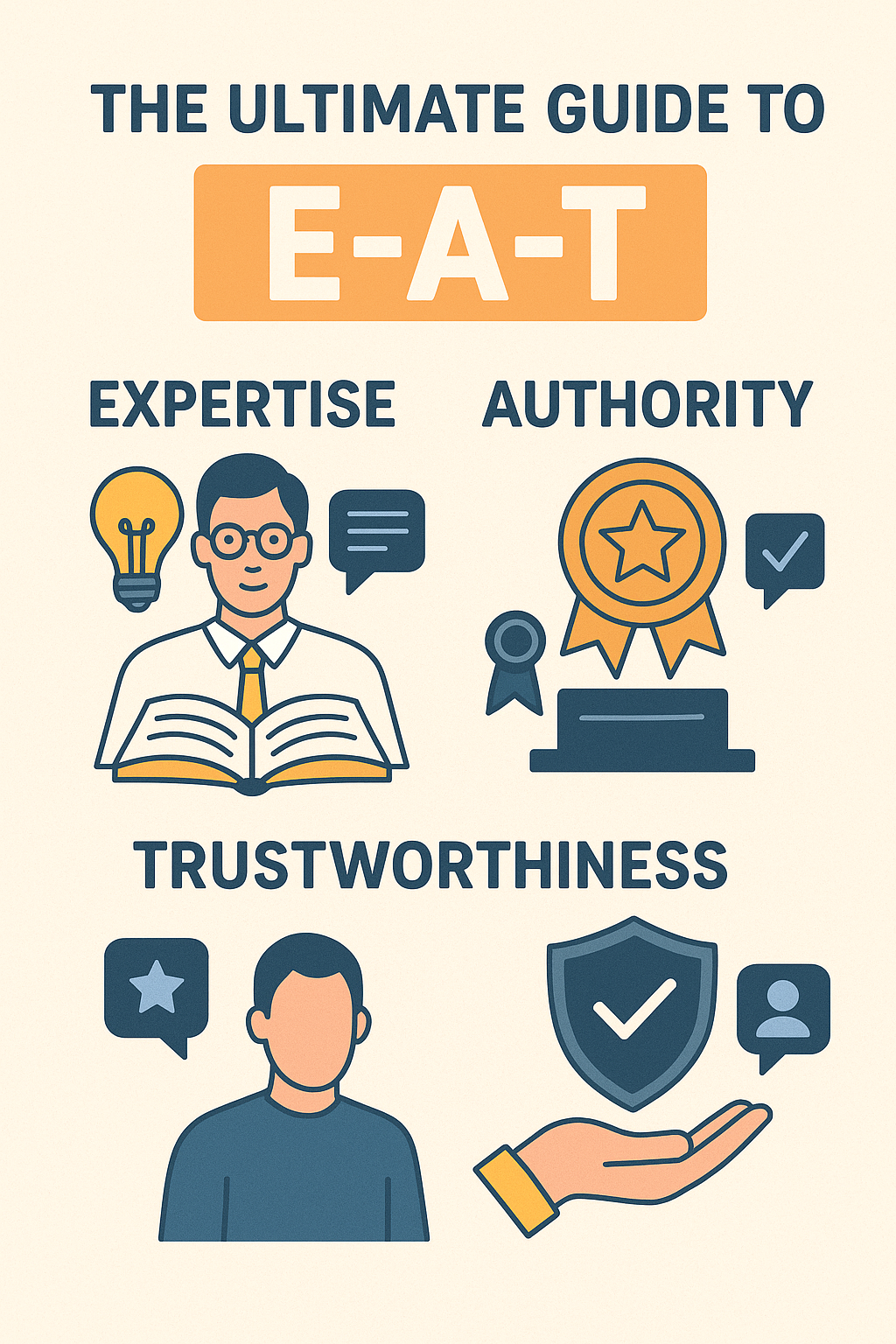
If you’ve ever wondered why some websites rank higher on Google despite having similar content, The Ultimate Guide to E-A-T (Expertise the answer often lies in E-A-T — Expertise, Authority, and Trustworthiness.
These three pillars have become core principles of Google’s Search Quality Evaluator Guidelines, influencing how content is evaluated for reliability and relevance.
Understanding and implementing E-A-T is not just an SEO tactic — it’s a long-term brand credibility strategy that can separate your website from the competition.
2: What is E-A-T and Why It Matters for SEO?
E-A-T stands for Expertise, Authority, and Trustworthiness, a concept introduced by Google to determine whether a website or author provides accurate, valuable, and reliable information.
It’s not a direct ranking factor (like keywords or backlinks), but it strongly influences how Google’s algorithms evaluate content quality — especially for YMYL (Your Money or Your Life) topics, such as health, finance, or legal advice.
3: How E-A-T Affects Rankings
Google’s AI systems and human evaluators use E-A-T principles to:
- Reward sites that show genuine expertise and accuracy.
- Penalize low-quality or misleading content.
- Promote brands that build long-term trust with users.
3: E-A-T in Google’s Algorithms
In recent updates like Google’s Helpful Content Update and Core Algorithm Updates, E-A-T signals play a huge role.
For example:
- Medical content from verified professionals (like WebMD) ranks higher than random blogs.
- Financial advice from recognized experts (like Investopedia) outperforms amateur content.
These examples show that Google’s priority is user safety and accuracy, and E-A-T helps filter out misinformation.
2: Understanding the “E” — Expertise
3: What Does Expertise Mean in SEO?
Expertise means having and demonstrating deep knowledge in your niche. It’s not enough to write about a topic — you must prove you know it well.
Expertise focuses on:
- The author’s qualifications and experience
- The depth and accuracy of the content
- The clarity and usefulness of explanations
Google looks for signs that the content creator is a subject-matter expert, not just a content writer.
3: Example — Medical Website vs. Lifestyle Blog
Imagine two websites writing about “home remedies for cold.”
- A medical website authored by a certified doctor includes citations, medical terms, and safety notes.
- A lifestyle blog written by an anonymous writer gives vague suggestions without sources.
Which one ranks higher?
👉 The medical website — because it demonstrates clear expertise supported by facts and credentials.
3: How to Showcase Expertise in Content
If you want to show expertise, focus on these strategies:
4: 1. Display Author Credentials
List qualifications, professional experience, or certifications in the author bio. For example:
“Written by Jane Smith, Certified Nutritionist (MSc. Dietetics, 8+ years experience).”
4: 2. Use First-Hand Experience
Use examples, case studies, and personal results.
Example: “After testing 10 SEO tools, we found that SurferSEO improved content performance by 35%.”
4: 3. Include Verified Sources
Link to official reports, studies, and data from credible organizations.
Example: “According to HubSpot, 83% of marketers use AI tools for SEO in 2024.”
4. Write Comprehensive, Clear, and Educational Content
Google values depth. Don’t just skim topics — educate your reader. Use tutorials, data, and visuals to simplify complex ideas.
2: Real-Life Examples of Expertise in Action
| Brand | Niche | What They Do Right |
|---|---|---|
| WebMD | Health | Uses medical reviewers, citations, and clear disclaimers. |
| Ahrefs Blog | SEO | Content written by experts using data from their own tool. |
| Neil Patel | Digital Marketing | Combines personal experience with in-depth analytics. |
Each of these brands dominates search results not just because of keywords — but because they prove they know what they’re talking about.
2: Why Expertise Builds Long-Term SEO Success
When readers consistently find value in your content, three powerful things happen:
- They trust your brand more.
- They stay longer (increasing dwell time and engagement).
- They return for more (building loyalty).
Google notices these behaviors and rewards your website accordingly.
In other words, expertise → trust → traffic → rankings.
2: Pros and Cons of Focusing on Expertise
| Pros | Cons |
|---|---|
| Builds brand credibility and trust | Takes time to establish authority |
| Improves rankings for YMYL topics | Requires qualified contributors |
| Increases engagement and backlinks | May need investment in expert writers |
Key takeaway: Investing in expertise may seem slow at first, but it’s the foundation of sustainable SEO success.
2: Actionable Insights
✅ Identify your content niche and create expert-driven topics.
✅ Build a credible author page with qualifications.
✅ Update old blogs with verified statistics and references.
✅ Use case studies or first-hand experience to boost authenticity.
Building Authority — The Second Pillar of E-A-T
In Part 1, we explored how Expertise helps you create valuable and reliable content.
Now, it’s time to dive into the second — and arguably most powerful — element of E-A-T: Authority.
Authority is what makes Google (and users) believe that you’re the go-to source in your industry. Even if you’re an expert, your content won’t reach its full potential until you’re recognized as an authority in your field.
2: What Does “Authority” Mean in SEO?
In simple terms, Authority means recognition and reputation — both from people and search engines.
When your website earns mentions, citations, backlinks, and trust from other credible sources, Google interprets that as a strong signal of authoritative value.
3: The Connection Between Authority and Ranking
- High-authority sites like Forbes, HubSpot, or TechCrunch rank easily because of their established credibility.
- When smaller sites get backlinks or mentions from such platforms, their authority (and ranking potential) grows too.
This relationship forms the foundation of off-page SEO — the process of improving your online reputation through external validation.
2: How Google Measures Authority
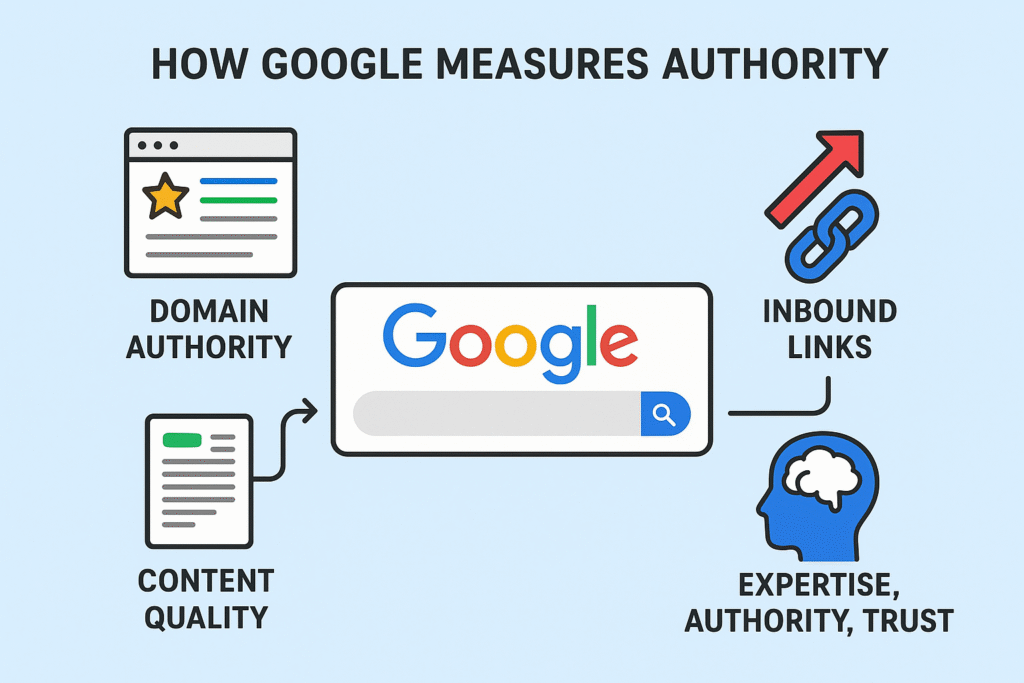
Google uses a combination of signals to measure authority, including:
3: 1. Backlinks from Reputable Sources
Quality backlinks remain one of the strongest indicators of authority.
However, it’s not about quantity — it’s about relevance and credibility.
A backlink from a respected niche blog (like Moz linking to your SEO article) is worth more than 100 random directory links.
2. Mentions and Citations
Even unlinked mentions (brand references) signal trust.
If people talk about your brand positively on forums, social media, or news sites, Google takes notice.
3. Author Reputation
Google evaluates who wrote the content — and whether that person has credibility outside the website.
For instance, when “Dr. Jane Miller” (Ph.D. in Psychology) writes an article, her professional identity adds authority beyond the domain.
4. Domain Age and Consistency
Older websites that consistently produce quality content often carry more authority.
But even new sites can build authority quickly by publishing expert-led, accurate, and original content.
2: Real-Life Examples of Authoritative Brands
| Brand | Niche | Why They’re Seen as Authorities |
|---|---|---|
| HubSpot | Digital Marketing | Offers free tools, data-driven reports, and expert blogs trusted by professionals. |
| Healthline | Health & Wellness | Medical reviewers, citations, and fact-checking systems in place. |
| NerdWallet | Finance | Combines expert advice with government and financial data sources. |
| Backlinko (Brian Dean) | SEO | Backed by personal expertise, case studies, and backlinks from industry leaders. |
Each of these brands built authority through consistency, expertise, and validation from other credible sources.
2: How to Build Authority for Your Website
1. Create High-Value, Shareable Content
Google rewards content that people naturally want to link to.
Focus on original research, data-driven insights, and actionable guides.
Example: Publish “2025 SEO Trends Report” or “Case Study: How We Increased Organic Traffic by 200%.”
2. Earn Backlinks Strategically
Use ethical link-building strategies, such as:
- Guest posting on relevant high-DA blogs
- Digital PR (press mentions, interviews, expert roundups)
- Broken link building (replacing outdated links with your updated content)
- HARO (Help A Reporter Out) for media exposure
3. Strengthen Author Profiles
Include author bios with credentials and link them to professional profiles like LinkedIn or Google Scholar.
Add an “About the Author” section to every post with clear expertise proof.
4. Leverage Testimonials and Case Studies
Social proof enhances perceived authority.
Example: “Our SEO campaign helped a client grow traffic by 120% in 3 months — featured in Search Engine Journal.”
5. Publish Consistently
Authority builds over time. The more you publish in-depth, factual content, the more users (and Google) will recognize you as an expert source.
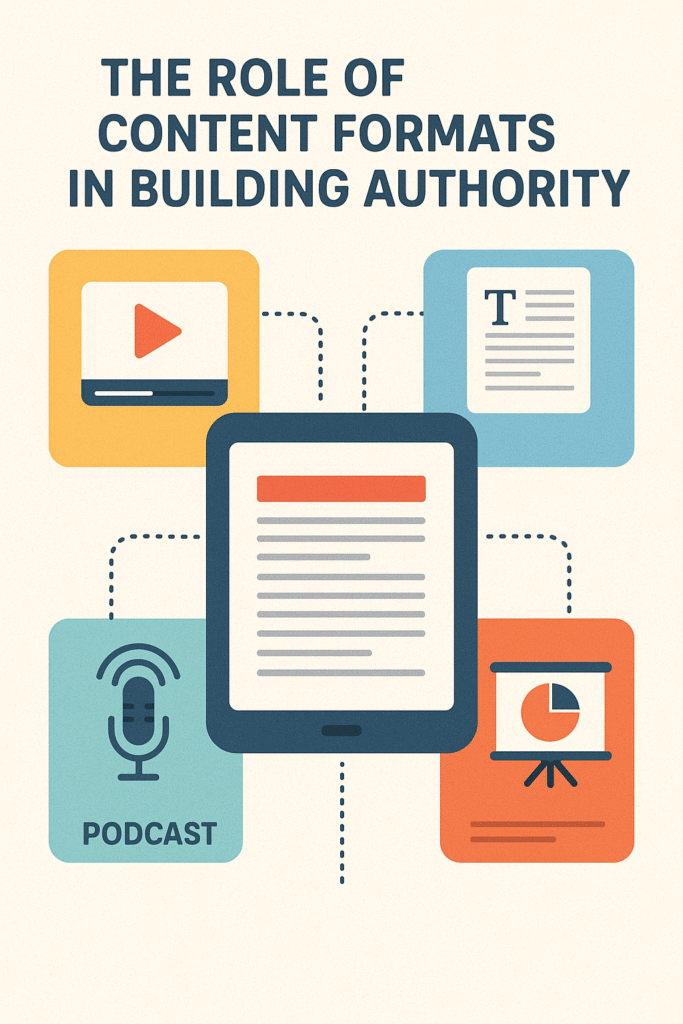
2: The Role of Content Formats in Building Authority
3: Long-Form Content
Comprehensive, well-structured content (like this guide!) tends to rank higher and attract more backlinks.
Aim for 2,000+ words with clear sections, visuals, and actionable advice.
3: Video and Podcast Content
Diversify your authority with YouTube tutorials, webinars, or podcasts. Google values multimedia content that educates and engages.
3: Social Media Authority
Maintain active and verified profiles on LinkedIn, X (Twitter), and Instagram.
When experts share or discuss your content, it boosts both brand visibility and trust signals.
2: Pros and Cons of Authority Building
| Pros | Cons |
|---|---|
| Enhances online reputation | Takes time and effort to build backlinks |
| Improves visibility and ranking | Risk of low-quality links hurting SEO |
| Attracts collaboration and partnerships | Requires content consistency and PR work |
2: Real-World Success Story
Example: Brian Dean – Backlinko
Brian Dean started Backlinko in 2013 with only a few blog posts but focused on data-backed SEO experiments.
- He earned mentions from Moz, Ahrefs, and HubSpot.
- His content was cited by major marketing platforms and universities.
- Result: Backlinko became one of the top 3 SEO blogs globally and was later acquired by Semrush.
👉 This case proves that authority grows from credibility, not volume.
2: Actionable Insights
✅ Conduct original research or surveys to stand out.
✅ Use guest blogging and PR to increase domain mentions.
✅ Showcase expert bios and third-party validations.
✅ Focus on link quality, not quantity.
✅ Maintain consistent publishing frequency.
Trustworthiness — The Final Pillar of E-A-T
You’ve learned how to demonstrate Expertise and build Authority — but without Trust, your SEO foundation remains incomplete.
Trustworthiness is the heart of E-A-T. It ensures your audience feels safe interacting with your website, sharing information, and believing your content.
In Google’s eyes, trust is the bridge between visibility and reliability — it determines whether you rank or sink.
2: What Does Trustworthiness Mean in SEO?
Trustworthiness refers to how credible, transparent, and secure your website appears to users and search engines.
Google measures trust using multiple indicators — from your website’s technical safety to the honesty of your content and brand reputation.
3: Key Trust Factors Include:
- Transparency: Clearly show who runs the site, who writes the content, and why they’re qualified.
- Accuracy: Provide correct, up-to-date, and well-referenced information.
- Security: Use HTTPS, safe checkout pages, and privacy policies.
- User Experience: Ensure smooth navigation, fast loading, and mobile optimization.
- Reputation: Maintain positive reviews and respond to user feedback.
2: Why Trustworthiness is Crucial for SEO
When users trust your site, they stay longer, share your content, and convert more easily — all of which are positive ranking signals.
According to a 2024 Edelman Trust Barometer Report,
81% of consumers say trust influences their buying decisions more than price.
And from Google’s perspective:
Websites that show transparency and credibility get prioritized in YMYL (Your Money or Your Life) search results, where accuracy is vital.
2: How Google Evaluates Trust
Google uses both human quality raters and AI algorithms to determine trustworthiness.
Their evaluation criteria include:
1. Secure and Transparent Website
A secure (HTTPS) connection is mandatory.
Also, pages like “About Us,” “Privacy Policy,” and “Contact” increase transparency.
2. Honest and Verifiable Information
If you claim statistics or facts, cite the source. If you make promises, deliver on them.
Example: Instead of “Guaranteed 300% growth,” say “Our clients saw up to 300% growth based on verified case studies.”
3. Credible Reviews and Testimonials
Positive feedback across Google My Business, Trustpilot, or social media boosts your trust score.
4. Clear Author Identity
Google favors content written by real, identifiable people — not faceless entities.
5. Reputation Management
Respond to reviews, handle criticism gracefully, and address customer issues openly.
2: Real-Life Examples of Trustworthy Brands
| Brand | Niche | Why They’re Trusted |
|---|---|---|
| Amazon | E-commerce | Transparent reviews, secure payments, buyer protection. |
| Wikipedia | Knowledge | Open editing but strict citation policy and editorial review. |
| Shopify | SaaS | Clear pricing, customer testimonials, and transparent business practices. |
| WebMD | Health | Cited sources, medical reviewers, and disclaimers for accuracy. |
Each of these companies shows that trust isn’t claimed — it’s proven through consistent transparency and reliability.
2: How to Build Trustworthiness on Your Website
1. Optimize for Transparency
- Add “About Us,” “Meet the Team,” and “Contact Info” pages.
- Include physical addresses or verified business details.
- Showcase author bios with credentials.
2. Strengthen Security
- Always use HTTPS.
- Display SSL certificates, trust badges, and safe payment gateways if you sell online.
3. Be Honest About Limitations
Don’t oversell your products or content. Admit what you don’t know — readers appreciate honesty.
Example: “While we’re not doctors, our advice is based on research from medical sources.”
4. Update Content Regularly
Outdated information destroys trust. Schedule quarterly audits to refresh data, fix broken links, and recheck facts.
5. Highlight Real Testimonials and Case Studies
User-generated content like reviews or success stories builds authenticity and emotional trust.
2: The Role of Design and UX in Building Trust
Even design impacts trustworthiness.
A Stanford Web Credibility Study found that 75% of users judge a company’s credibility based on website design.
3: Trust-Boosting Design Tips
- Use a clean, professional layout with no clutter or intrusive ads.
- Ensure fast page load speed (under 3 seconds).
- Avoid excessive pop-ups or misleading CTAs.
- Use consistent branding and tone across all pages.
2: Pros and Cons of Focusing on Trustworthiness
| Pros | Cons |
|---|---|
| Increases user loyalty and conversions | Requires ongoing effort and monitoring |
| Reduces bounce rate and boosts dwell time | Managing reviews can be time-consuming |
| Strengthens Google and user confidence | Mistakes or negative PR can damage trust quickly |
2: Actionable Insights
✅ Create transparent author and business pages.
✅ Add SSL certificates and visible security icons.
✅ Regularly update and fact-check your content.
✅ Encourage and manage user reviews positively.
✅ Be honest and avoid clickbait or overpromises.
2: Final Thoughts — Why E-A-T is the Future of SEO
E-A-T is more than an SEO checklist — it’s the blueprint for digital credibility.
Search engines are evolving to think like humans, valuing trust, authenticity, and expertise over keyword stuffing or manipulative tactics.
Here’s the big takeaway:
Expertise earns attention, Authority earns recognition, and Trust earns loyalty.
If your content consistently reflects these values, you’ll not only rank higher — you’ll build a sustainable brand that audiences genuinely rely on.
In a world filled with AI-generated content, human credibility is the new SEO currency.
2: The Complete E-A-T Framework Recap
| Pillar | Focus | Key Actions |
|---|---|---|
| Expertise | Knowledge & skill | Showcase author qualifications, cite reliable data |
| Authority | Recognition | Earn backlinks, mentions, and media coverage |
| Trustworthiness | Integrity | Ensure transparency, honesty, and secure user experience |
2: FAQs About E-A-T (Expertise, Authority, Trustworthiness)
Q1: Is E-A-T a direct ranking factor in Google’s algorithm?
No, E-A-T isn’t a single ranking factor but a framework Google uses to assess content quality indirectly through signals like backlinks, author profiles, and trust indicators.
Q2: How can small websites improve E-A-T without big budgets?
Start by focusing on authenticity — display real author bios, link to credible sources, secure your site with HTTPS, and collaborate with niche experts or bloggers.
Q3: Does AI-generated content affect E-A-T?
Yes, if AI content lacks human oversight or expertise, it can harm E-A-T. Always fact-check, add human edits, and ensure your name or brand stands behind the information.
Q4: How often should I update my E-A-T signals?
Review your content and author credibility every 3–6 months. Regularly update bios, add new sources, and monitor reviews or backlinks.
Q5: What’s the biggest mistake brands make with E-A-T?
Many focus only on backlinks or technical SEO while ignoring trust and transparency — the human side of ranking that truly defines E-A-T success.
2: Strong Conclusion
The internet is overflowing with content — but only those who educate with expertise, influence with authority, and serve with trust stand out.
E-A-T isn’t just Google’s guideline — it’s the ethical and strategic foundation of digital success.
Brands that embrace E-A-T build not just traffic, but lasting relationships.
Whether you’re a blogger, business owner, or digital marketer, mastering E-A-T ensures that your message not only ranks high — it resonates deeply.
In 2025 and beyond, E-A-T isn’t an option. It’s the standard for credibility, growth, and sustainable SEO.
The Ultimate Guide to E-A-T (Expertise The Ultimate Guide to E-A-T (Expertise The Ultimate Guide to E-A-T (Expertise The Ultimate Guide to E-A-T (Expertise The Ultimate Guide to E-A-T (Expertise The Ultimate Guide to E-A-T (Expertise The Ultimate Guide to E-A-T (Expertise The Ultimate Guide to E-A-T (ExpertiseThe Ultimate Guide to E-A-T (Expertise The Ultimate Guide to E-A-T (Expertise The Ultimate Guide to E-A-T (Expertise The Ultimate Guide to E-A-T (Expertise The Ultimate Guide to E-A-T (Expertise The Ultimate Guide to E-A-T (ExpertiseThe Ultimate Guide to E-A-T (Expertise The Ultimate Guide to E-A-T (Expertise The Ultimate Guide to E-A-T (Expertise The Ultimate Guide to E-A-T (Expertise The Ultimate Guide to E-A-T (Expertise The Ultimate Guide to E-A-T (Expertise The Ultimate Guide to E-A-T (Expertise The Ultimate Guide to E-A-T (Expertise The Ultimate Guide to E-A-T (Expertise The Ultimate Guide to E-A-T (Expertise The Ultimate Guide to E-A-T (Expertise The Ultimate Guide to E-A-T (Expertise The Ultimate Guide to E-A-T (Expertise The Ultimate Guide to E-A-T (Expertise The Ultimate Guide to E-A-T (Expertise The Ultimate Guide to E-A-T (ExpertiseThe Ultimate Guide to E-A-T (Expertise