
Introduction
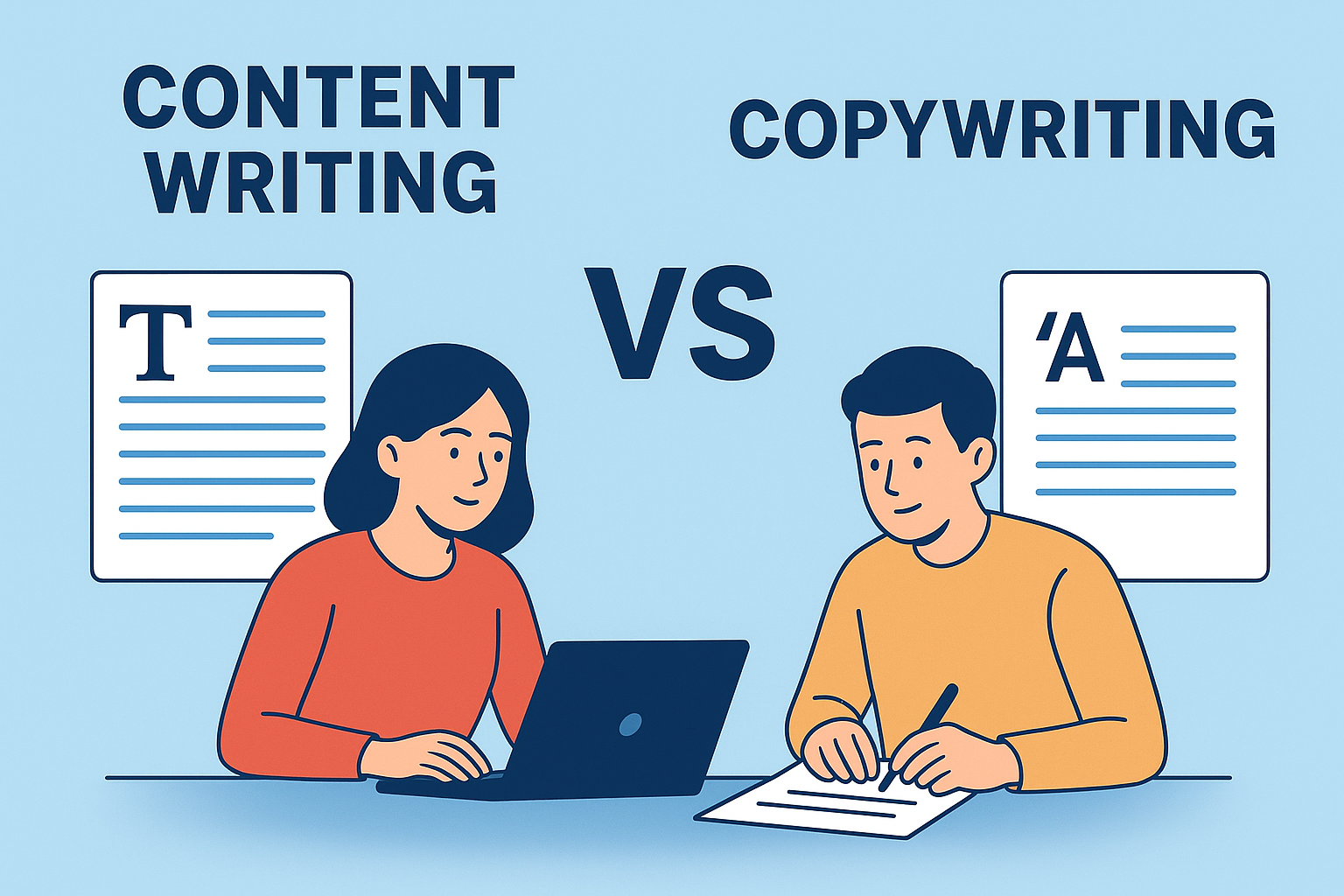
In the digital age, words have power. Businesses, bloggers, and marketers all rely on written content to attract, engage, and convert audiences. But when it comes to Content Writing vs Copywriting: Difference Explain many people get confused. Aren’t they the same thing?
The truth is,Content Writing vs Copywriting: Difference Explained purposes, require different skill sets, and produce different results. If you’re planning a career in writing, running a blog, or growing a business online, you must know the distinction.
This article will cover:
- What is content writing?
- What is copywriting?
- The core differences between the two
- Real-life examples and case studies
- Pros and cons of each
- When to use content writing vs copywriting
- SEO and marketing insights
- FAQs to clear your doubts
By the end, you’ll have complete clarity on how content writing and copywriting differ — and how to use both effectively.
What is Content Writing?
Content writing is the process of creating informative, valuable, and engaging content that educates, entertains, or informs the reader. The purpose is not direct selling but building trust, authority, and long-term relationships with the audience.
Characteristics of Content Writing
- Long-form and detailed
- Focused on educating and informing
- Helps in SEO and organic traffic
- Builds brand authority over time
Examples of Content Writing
- Blog posts (e.g., “10 Tips for Digital Marketing in 2025”)
- How-to guides (e.g., “Step-by-Step Guide to Email Marketing”)
- Whitepapers and eBooks
- Case studies
- Informational web pages
- Product tutorials and manuals
👉 Case Study: HubSpot is a great example. Their blog generates millions of monthly visitors because of well-researched, educational content. Instead of selling directly, they use content to attract potential customers into their funnel.
What is Copywriting?
Copywriting is the art of writing persuasive and compelling text designed to make readers take action. The action could be buying a product, subscribing to a newsletter, clicking a link, or signing up for a service Content Writing vs Copywriting: Difference Explained.
Characteristics of Copywriting
- Short, punchy, and persuasive
- Focused on conversion and sales
- Appeals to emotions and urgency
- Direct call-to-action (CTA)
Examples of Copywriting
- Website sales pages
- Product descriptions
- Advertisements (Google Ads, Facebook Ads)
- Email marketing campaigns
- Landing page copy
- Slogans and taglines
👉 Case Study: Apple’s product pages are excellent copywriting examples. Instead of explaining “how” the technology works in detail, their copy focuses on emotions — sleek design, innovation, lifestyle — making users want the product.
Content Writing vs Copywriting: Key Differences
Here’s a breakdown of how they differ:
| Factor | Content Writing | Copywriting |
|---|---|---|
| Purpose | Educate, inform, engage | Persuade, sell, convert |
| Tone | Informative, detailed | Persuasive, emotional |
| Length | Usually long-form | Short-form, concise |
| SEO Role | Builds organic traffic | Boosts conversions |
| Examples | Blogs, guides, eBooks | Ads, landing pages, sales copy |
| Goal | Long-term trust | Immediate action |
Real-Life Examples
Example 1: Blog vs Sales Page
- A blog post titled “Best Smartphones in 2025 – Complete Guide” → Content writing. It educates readers, compares options, and ranks on Google.
- A landing page with the headline “Upgrade to the New iPhone 15 – Order Now with Free Shipping” → Copywriting. It pushes immediate purchase.
Example 2: Email Marketing
- An email newsletter with tips on “Improving Work Productivity” → Content writing.
- An email campaign saying “Get 50% Off on Premium Tools – Limited Time Offer!” → Copywriting.
Pros and Cons of Content Writing
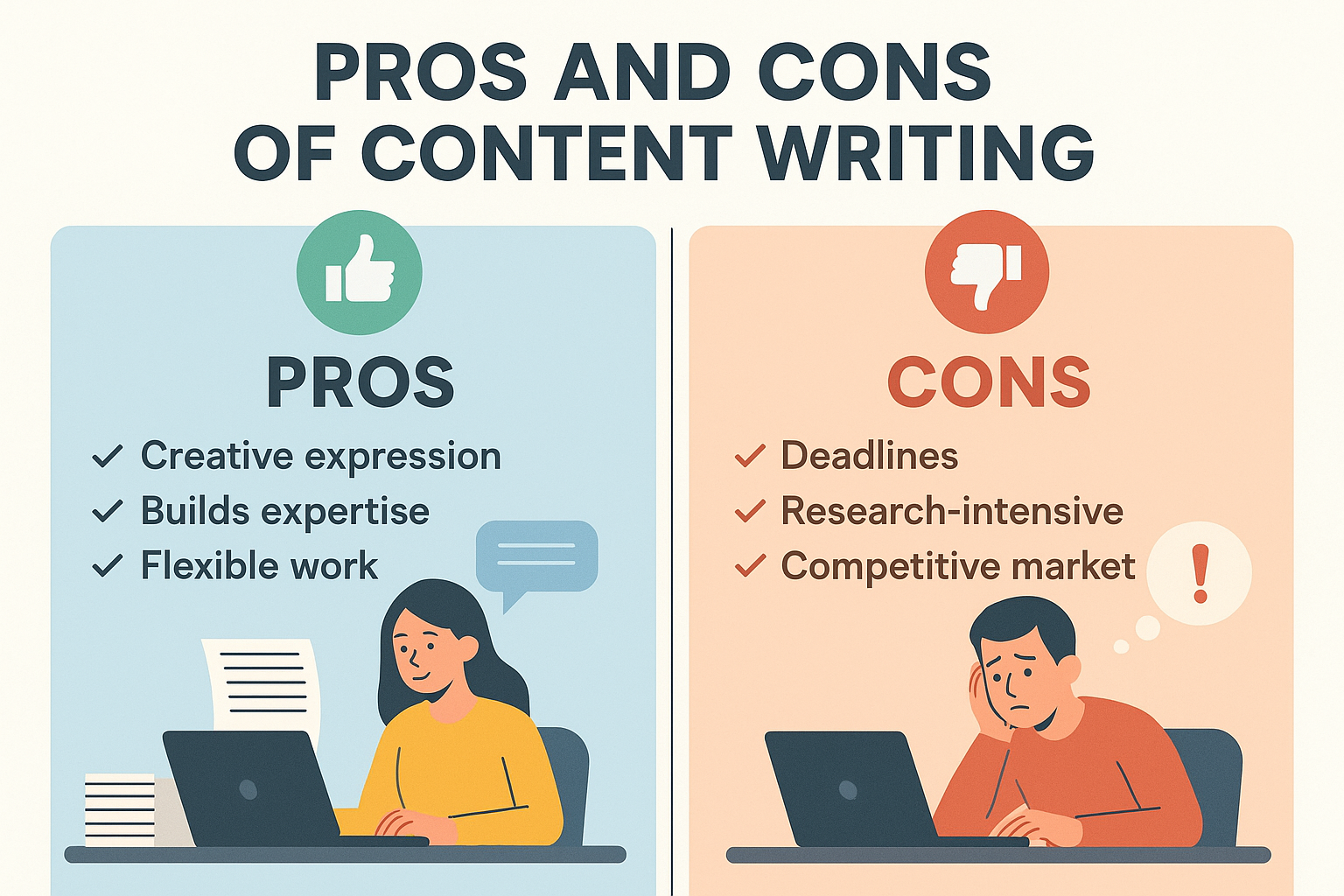
✅ Pros
- Builds SEO traffic
- Positions brand as an authority
- Increases trust and loyalty
- Evergreen content drives results for years
❌ Cons
- Slow to show results
- Requires consistency and research
- Not always conversion-focused
Pros and Cons of Copywriting
✅ Pros
- Immediate results (sales, signups)
- Increases revenue quickly
- Works well for ads and promotions
- Great for product launches
❌ Cons
- Not evergreen (ad copy expires fast)
- Doesn’t build long-term relationships alone
- Needs continuous testing to work
When to Use Content Writing vs Copywriting
- Use content writing when:
- You want to grow SEO traffic
- You aim to educate or inform
- You want to build long-term authority
- Use copywriting when:
- You’re launching a product
- You want immediate sales or conversions
- You’re running ads or sales campaigns
👉 Smart businesses combine both. For example, a blog brings in visitors (content writing), and then a well-written sales page converts them into customers (copywriting).
SEO Impact: Content Writing vs Copywriting
Content Writing and SEO
- Long-tail keywords boost rankings
- Blog posts drive organic search traffic
- Backlinks come from valuable articles
- Google prefers informative content
Copywriting and SEO
- Not directly SEO-focused but improves CTR (Click-Through Rate)
- Great ad copy improves Quality Score in PPC campaigns
- Headlines with power words boost clicks
Case Study: Using Both Together
Neil Patel’s strategy combines the best of both worlds:
- His blogs (content writing) generate massive organic traffic.
- His sales pages and courses (copywriting) convert that traffic into paying clients.
This hybrid approach shows that content attracts, copy converts.
Common Misconceptions
- “Content writing and copywriting are the same” → False. They serve different goals.
- “Copywriting doesn’t need SEO” → Partially false. SEO titles and meta descriptions matter.
- “Content writing doesn’t sell” → False. While indirect, it nurtures leads that later convert.
Skills Required
Content Writer Skills
- Research and analytical ability
- SEO knowledge
- Storytelling
- Clear, concise writing
Copywriter Skills
- Persuasion psychology
- Sales funnel understanding
- Strong CTA writing
- Creativity and brevity
Future Trends (2025 & Beyond)
- AI Tools will support writers, but creativity and strategy will remain human strengths.
- Content personalization will grow — blogs tailored to user intent.
- Emotional copywriting will dominate ads, focusing on empathy and authenticity.
- SEO + copywriting integration will be essential for full-funnel marketing.
Conclusion
Both Content Writing vs Copywriting: Difference Explained are essential in digital marketing. Content writing builds awareness, trust, and authority over time, while copywriting drives immediate conversions and sales.
If you want sustainable growth, use both strategically: content attracts the audience, copywriting converts them. By mastering the art of when and how to use each, you’ll create a strong marketing strategy that brings both traffic and revenue.
FAQs About Content Writing vs Copywriting
1. What is the main difference between content writing and copywriting?
Content writing educates and informs, while copywriting persuades and sells.
2. Which is better for SEO: content writing or copywriting?
Content writing is better for SEO because it focuses on long-form, keyword-rich content.
3. Can one person be both a content writer and a copywriter?
Yes, many professionals master both skills to become versatile digital marketers.
4. Is blogging content writing or copywriting?
Blogging is primarily content writing, but blog posts can use copywriting techniques for better engagement.
5. Which pays more: content writing or copywriting?
Generally, copywriting pays more because it directly impacts sales, but high-level content writers also earn well Content Writing vs Copywriting: Difference Explained Content Writing vs Copywriting: Difference Explained Content Writing vs Copywriting: Difference Explained Content Writing vs Copywriting: Difference Explained Content Writing vs Copywriting: Difference Explained Content Writing vs Copywriting: Difference Explained Content Writing vs Copywriting: Difference Explained Content Writing vs Copywriting: Difference Explained Content Writing vs Copywriting: Difference Explained