
Introduction
In today’s rapidly evolving digital landscape, the integration of Artificial Intelligence (AI) into digital marketing strategies has become imperative. Marketers are increasingly turning to AI to enhance customer experiences, optimize campaigns, and drive business growth. This article delves into the significance of combining digital marketing with AI, offering insights into course structures, real-world applications, and the transformative impact on the marketing industry
Understanding Digital Marketing Integration
What is Digital Marketing?
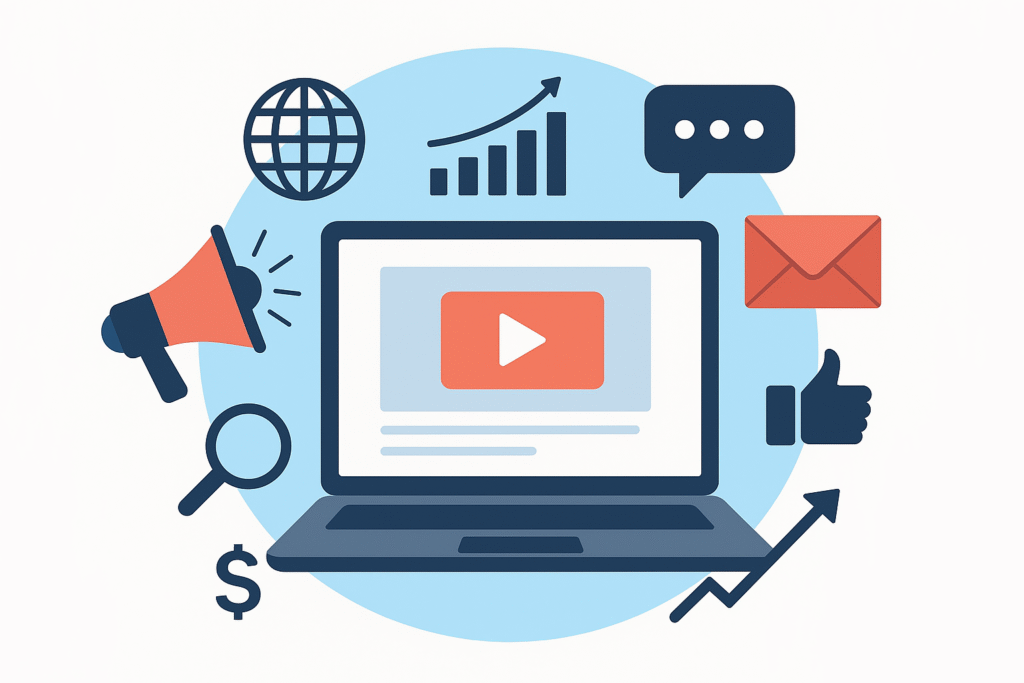
Digital marketing encompasses all marketing efforts that utilize the internet or electronic devices. It includes channels such as search engines, social media, email, and websites to connect with current and prospective customers. The primary goal is to promote brands, build preference, and increase sales through digital platforms.
The Role of ai in Digital Marketing
AI in digital marketing refers to the use of machine learning algorithms, data analytics, and automation tools to enhance marketing strategies. AI enables marketers to analyze vast amounts of data, predict consumer behavior, personalize content, and automate repetitive tasks, leading to more efficient and effective marketing campaigns.
Why Enroll in a Digital Marketing and AI Course?
1. Stay Ahead in a Competitive Market
With businesses increasingly adopting AI-driven marketing strategies, professionals equipped with AI skills are in high demand. A comprehensive course provides the knowledge and tools to stay competitive in the evolving job market.
2. Enhance Campaign Effectiveness
AI tools can analyze consumer data to identify trends and preferences, allowing marketers to create targeted campaigns that resonate with their audience, thereby improving engagement and conversion rates.
3. Automate Repetitive Tasks
AI can automate tasks such as content creation, social media posting, and email marketing, freeing up time for marketers to focus on strategic planning and creative endeavors.
4. Personalize Customer Experiences
AI enables the delivery of personalized content and recommendations, enhancing customer satisfaction and loyalty by providing relevant and timely information.
Course Structure and Syllabus Overview
A typical Digital Marketing and AI course spans several weeks, covering foundational concepts and advanced applications. Here’s an overview of what such a course might entail:
Week 1-2: Introduction to Digital Marketing
- Understanding digital marketing channels
- SEO and SEM fundamentals
- Content marketing strategies
Week 3-4: Introduction to AI in Marketing
- Basics of AI and machine learning
- AI tools for data analysis
- Ethical considerations in AI usage
Week 5-6: AI Applications in Digital Marketing
- Predictive analytics for customer behavior
- Personalization techniques using AI
- Chatbots and conversational AI in customer service
Week 7-8: Automation and Optimization
- Automating marketing workflows
- A/B testing and optimization strategies
- Performance metrics and analytics
Week 9-10: Capstone Project
- Developing an AI-driven digital marketing campaign
- Presenting findings and strategies
- Peer reviews and feedback sessions
Real-World Applications and Case Studies
Case Study 1: AI-Powered Email Marketing
A leading e-commerce brand implemented AI algorithms to analyze customer purchase history and browsing behavior. By segmenting their email list and sending personalized product recommendations, they achieved a 30% increase in open rates and a 20% boost in conversion rates.
Case Study 2: Chatbots in Customer Service
A telecommunications company deployed AI-powered chatbots on their website and mobile app. The bots handled customer inquiries 24/7, resolving 60% of issues without human intervention and reducing response times by 50%.
Case Study 3: Predictive Analytics for Ad Campaigns
An online retailer utilized AI-driven predictive analytics to forecast customer purchasing behavior. This insight allowed them to optimize their advertising spend, resulting in a 25% increase in ROI on ad campaigns.
Pros and Cons of Integrating AI in Digital Marketing
Pros
- Efficiency: Automates repetitive tasks, saving time and resources.
- Personalization: Delivers tailored content to individual users.
- Data-Driven Decisions: Provides insights for informed decision-making.
- Scalability: Handles large volumes of data and interactions seamlessly.
Cons
- High Initial Investment: Implementing AI tools can be costly.
- Data Privacy Concerns: Handling customer data requires stringent security measures.
- Dependence on Data Quality: AI’s effectiveness is contingent on the quality of data input.
- Job Displacement: Automation may lead to reduced demand for certain job roles.
Statistics Highlighting the Impact of AI in Marketing
- 77% of marketers report that AI improves customer engagement.
- 75% believe AI enhances their ability to compete with larger firms.
- 90% of marketing leaders consider AI proficiency a must-have skill for the coming years.
Frequently Asked Questions (FAQs)
1. Who should enroll in a Digital Marketing and AI course?
This course is ideal for marketing professionals, business owners, and individuals seeking to enhance their digital marketing skills with AI integration.
2. Do I need a technical background to take this course?
No, the course is designed for individuals with basic marketing knowledge. Technical skills are not required.
3. What AI tools will I learn to use?
Participants will gain hands-on experience with tools like ChatGPT, Midjourney, Google Colab, and Looker.
4. Will I receive a certification upon completion?
Yes, upon successfully completing the course, you will receive a certification recognized by industry leaders.
5. How can AI improve my marketing campaigns?
AI can analyze customer data to provide insights, automate tasks, personalize content, and optimize campaigns for better performance.
Conclusion
Integrating AI into digital marketing strategies is no longer optional but a necessity for staying competitive in the modern business landscape. Enrolling in a Digital Marketing and AI course equips professionals with the skills and knowledge to leverage AI tools effectively, enhancing campaign performance and driving business growth. By understanding the fundamentals and applications of AI in marketing, individuals can position themselves at the forefront of the digital marketing revolution.