
Introduction
The digital revolution has reshaped how businesses connect with customers, and mobile marketing is at the center of this transformation. With over 7.5 billion mobile users worldwide in 2025, smartphones have become the most powerful medium for reaching audiences. Customers no longer wait for TV ads or email promotions—they expect brands to reach them instantly, personally, and on the platforms they use daily Future of Mobile Marketing Apps.
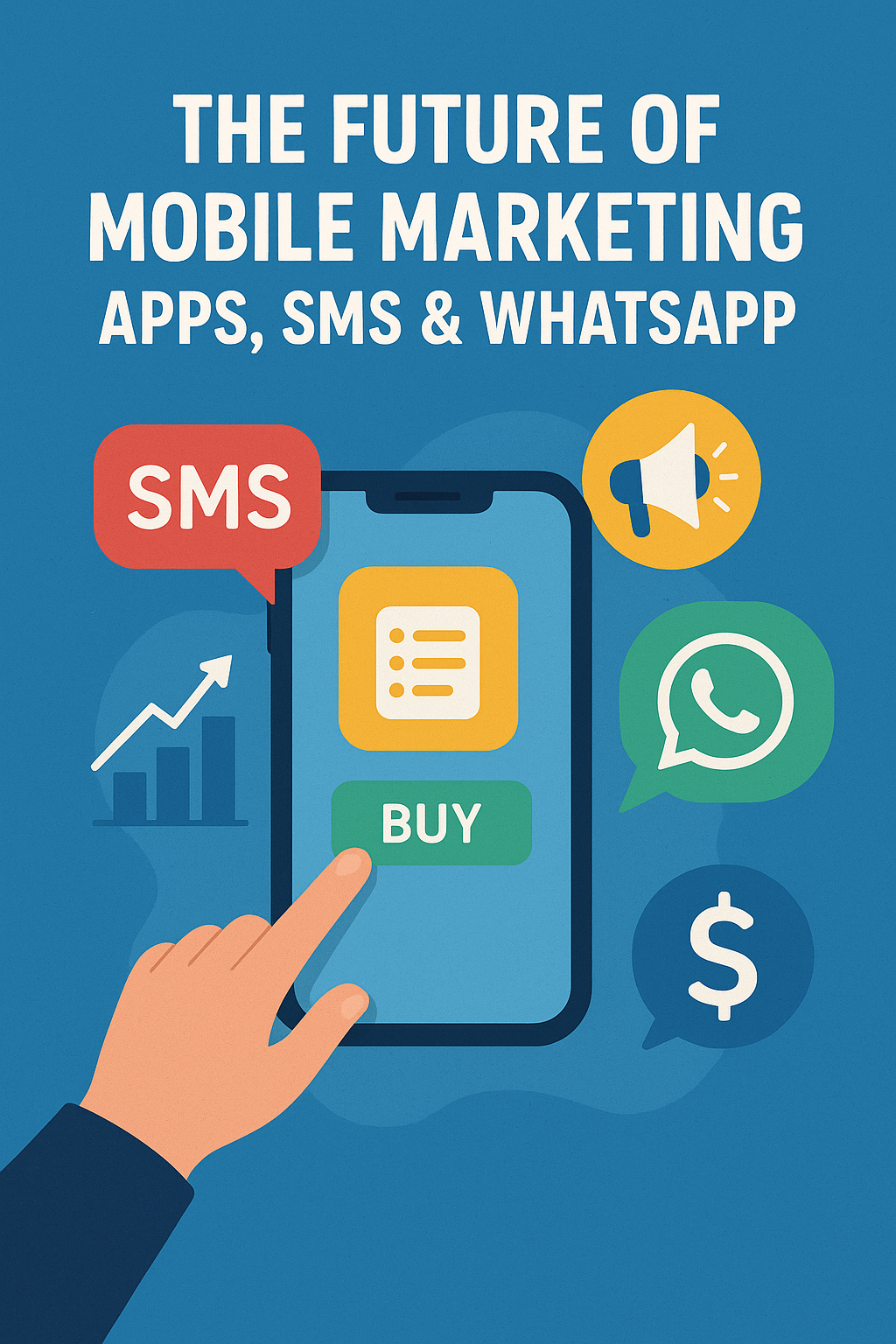
This is where mobile apps, SMS marketing, and WhatsApp marketing come into play. Together, these three channels represent the future of mobile marketing, offering direct, personalized, and measurable ways to engage customers.
In this article, we will dive deep into how apps, SMS, and WhatsApp are shaping the future of mobile marketing. We’ll cover strategies, real-life case studies, pros and cons, key statistics, actionable tips, and predictions for what lies ahead.
Why Mobile Marketing Matters in 2025 and Beyond
Growing Smartphone Penetration
According to Statista, 91% of the global population owns a smartphone in 2025. This unprecedented reach gives marketers access to almost every consumer in the world.
Shift in Consumer Behavior
People spend an average of 4.8 hours daily on mobile apps. Whether it’s shopping, entertainment, learning, or communication, mobile devices dominate attention spans.
Instant Communication
Unlike traditional marketing methods, mobile marketing provides real-time communication. Customers can receive a brand’s message instantly and take action within seconds.
Data-Driven Insights
Mobile platforms generate massive amounts of data, enabling businesses to create personalized campaigns tailored to consumer interests, location, and behavior.
Mobile Apps: The Future Powerhouse of Engagement
What Is Mobile App Marketing?
Mobile app marketing is the practice of promoting a brand, product, or service through a mobile application. It covers every stage of the customer journey—from app discovery to retention.
Importance of Apps in Mobile Marketing
- Personalization: Apps allow tailored recommendations based on browsing and purchase history.
- Push Notifications: Instant updates keep users engaged.
- Seamless Shopping: E-commerce apps reduce checkout friction, leading to higher conversions.
- Loyalty Programs: Apps make it easy to reward repeat customers.
Real-Life Example: Starbucks
Starbucks’ mobile app is a gold standard in mobile marketing. It integrates loyalty rewards, mobile payments, and personalized offers. As a result, the app accounts for over 25% of U.S. transactions, boosting both sales and customer loyalty.
Pros of App Marketing
- Strong customer loyalty
- Rich data collection
- High engagement through push notifications
- Better user experience
Cons of App Marketing
- High development costs
- Requires constant updates
- Competition is fierce (millions of apps available)
Future Trends in App Marketing
- AI-Powered Personalization: Apps will use AI to predict customer needs.
- Augmented Reality (AR): Retail apps will allow customers to “try before they buy.”
- Voice Commerce Integration: Apps optimized for voice assistants will drive hands-free shopping.
SMS Marketing: The Timeless but Evolving Channel
What Is SMS Marketing?
SMS marketing involves sending promotional messages, reminders, or alerts directly to a user’s phone via text messages. Despite being one of the oldest digital marketing tools, it remains one of the most effective.
Why SMS Still Works in 2025
- Open Rates: SMS messages enjoy a 98% open rate, compared to 20-30% for emails.
- Speed: Messages are typically read within 3 minutes of receipt.
- Reach: Works even without internet access, making it universal.
Real-Life Example: Domino’s Pizza
Domino’s uses SMS to send special offers and discount codes. Their SMS campaigns drive double-digit sales growth, particularly during weekends and holidays.
Pros of SMS Marketing
- Affordable and simple to implement
- Works on all devices
- Extremely high engagement rates
- Ideal for time-sensitive promotions
Cons of SMS Marketing
- Limited message length (160 characters)
- Can feel intrusive if overused
- Regulations (opt-in/opt-out) must be strictly followed
Future of SMS Marketing
- AI Chatbots via SMS: Automated responses will improve customer support.
- Integration with Mobile Wallets: Direct coupons and payment options within texts.
- Hyper-Personalization: Targeted promotions based on customer behavior.
WhatsApp Marketing: The Game Changer
Why WhatsApp?
With over 3 billion monthly active users in 2025, WhatsApp is the world’s most popular messaging app. Its WhatsApp Business API allows companies to interact with customers at scale.
Key Features of WhatsApp Marketing
- Broadcast Messages: Send promotions to multiple customers.
- Two-Way Conversations: Customers can ask queries in real-time.
- Rich Media Support: Share images, videos, catalogs, and documents.
- Payments Integration: Direct in-app transactions streamline purchases.
Real-Life Example: BMW
BMW used WhatsApp to launch a campaign for their electric vehicles in South Africa. Customers could chat with the brand directly, ask questions, and book test drives—all within WhatsApp. The campaign achieved a 65% engagement rate, far higher than traditional channels.
Pros of WhatsApp Marketing
- Personal and conversational
- Supports multimedia content
- Builds trust through verified business accounts
- High engagement and conversion rates
Cons of WhatsApp Marketing
- Requires user consent (opt-in)
- Risk of spamming if misused
- Limited automation compared to apps
Future Trends of WhatsApp Marketing
- AI-Powered Chatbots: Deliver 24/7 customer support.
- Click-to-WhatsApp Ads: Seamless integration with Facebook and Instagram.
- Voice & Video Commerce: Customers shopping through live video chats.
Comparing Apps, SMS, and WhatsApp in Mobile Marketing
| Feature | Mobile Apps | SMS Marketing | WhatsApp Marketing |
|---|---|---|---|
| Reach | Requires downloads | Universal (any phone) | Global, requires app |
| Engagement | High via push | Very high (98% open) | Extremely high (personal) |
| Cost | High (development) | Low (per SMS charge) | Medium (API, campaigns) |
| Personalization | Advanced | Limited | Strong (chat-based) |
| Best For | Loyalty & retention | Time-sensitive deals | Customer engagement & support |
Actionable Strategies for Businesses
- Integrate All Three Channels
- Use apps for loyalty programs
- SMS for flash sales
- WhatsApp for customer support
- Focus on Personalization
- Tailor push notifications
- Send targeted SMS offers
- Use WhatsApp chatbots for FAQs
- Leverage Analytics
- Track app usage
- Monitor SMS click-through rates
- Analyze WhatsApp engagement metrics
- Ensure Compliance
- Always get user consent (opt-in)
- Provide easy opt-out options
- Follow GDPR and local privacy laws
- Experiment with Rich Media
- AR features in apps
- Video links in SMS
- Product catalogs in WhatsApp
Case Study: Nike’s Multi-Channel Mobile Marketing
Nike uses apps, SMS, and WhatsApp together:
- Nike App: Personalized product recommendations.
- SMS Alerts: Exclusive early-bird discounts.
- WhatsApp Campaigns: Direct communication with sneakerheads about limited-edition drops.
The result? A 30% increase in mobile-driven sales and a massive boost in brand loyalty.
Conclusion
The future of mobile marketing lies in the synergy of apps, SMS, and WhatsApp. Each channel has its strengths: apps excel at personalization and loyalty, SMS dominates in speed and reach, and WhatsApp shines in conversational engagement.
For businesses, the winning formula in 2025 and beyond is not choosing one channel over the other but integrating all three into a cohesive mobile marketing strategy. Brands that embrace innovation, personalization, and customer-first communication will lead the next era of digital engagement.
FAQs
1. Why is mobile marketing important in 2025?
Mobile marketing is essential because consumers spend most of their time on smartphones. It offers instant, personal, and measurable communication channels for businesses.
2. Which is better: SMS or WhatsApp marketing?
Both are effective. SMS is best for time-sensitive offers due to high open rates, while WhatsApp is better for building relationships and providing customer support.
3. How can small businesses use mobile apps for marketing?
Small businesses can use affordable app builders, offer loyalty rewards, and integrate push notifications to drive customer engagement.
4. What are the risks of WhatsApp marketing?
The main risks include spamming customers, lack of consent, and limited automation. Businesses must follow ethical practices and privacy laws.
5. What trends will shape mobile marketing in the future?
AI personalization, AR experiences, chatbot-driven conversations, voice commerce, and seamless integration across apps, SMS, and WhatsApp will dominate.
Future of Mobile Marketing Apps Future of Mobile Marketing Apps Future of Mobile Marketing Apps Future of Mobile Marketing Apps Future of Mobile Marketing Apps Future of Mobile Marketing Apps Future of Mobile Marketing Apps Future of Mobile Marketing Apps Future of Mobile Marketing Apps Future of Mobile Marketing Apps Future of Mobile Marketing Apps Future of Mobile Marketing Apps Future of Mobile Marketing Apps Future of Mobile Marketing Apps